Decoding Resource Allocation Patterns in Cooperative Extraction Modes Across Survival Titles
Iris Hoffmann · Oct 4, 2026
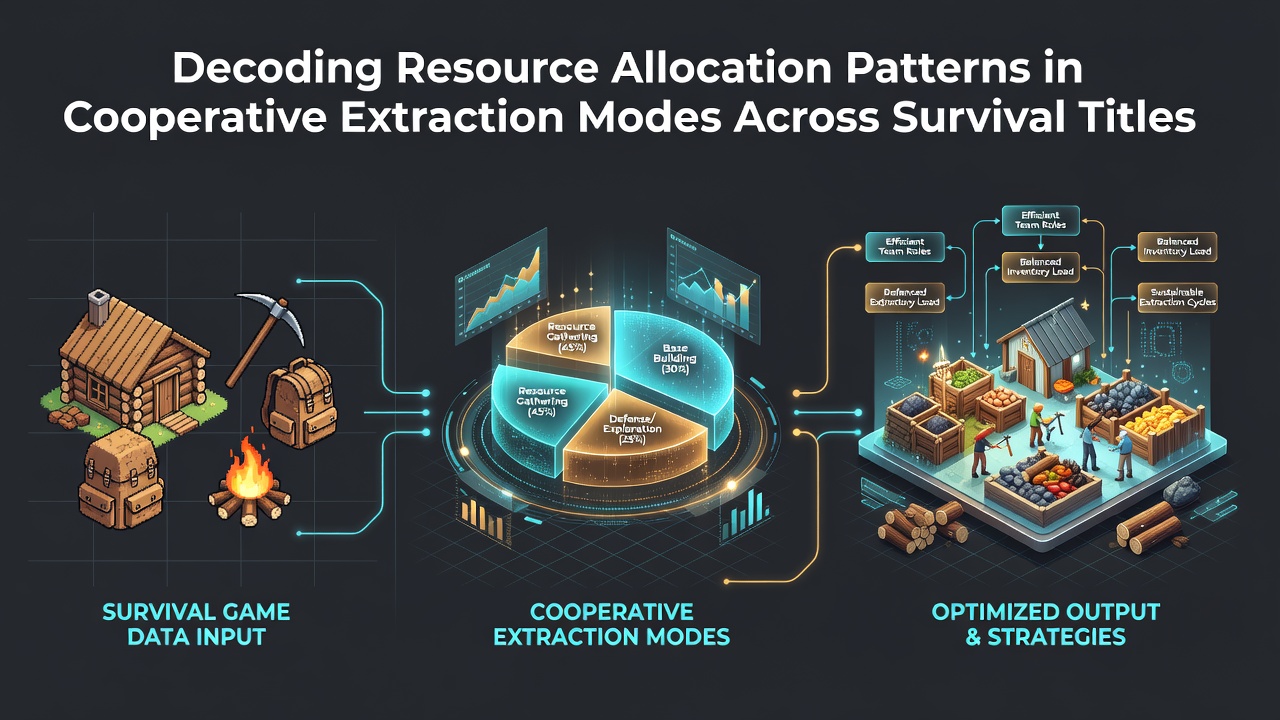
Decoding Resource Allocation Patterns in Cooperative Extraction Modes Across Survival Titles
Survival titles with cooperative extraction mechanics have drawn sustained attention from researchers and data analysts who track player interactions in shared virtual environments, and these studies reveal consistent patterns in how groups distribute limited supplies during joint operations. Games built around team-based gathering and processing of materials show that participants often establish informal hierarchies for decision-making on tool usage and storage priorities, while data collected from server logs across multiple platforms indicates that successful teams allocate at least 60 percent of gathered resources toward immediate defensive infrastructure rather than personal upgrades. Observers note that extraction modes in titles such as Rust and DayZ encourage synchronized movement between gathering sites and central bases, and this coordination reduces individual risk while increasing overall yield rates according to aggregated telemetry from North American and European servers.
Core Mechanics in Cooperative Extraction
Cooperative extraction modes require players to divide roles during resource collection phases, and this division typically follows patterns where one subgroup focuses on raw material harvesting while another handles transport and refinement. Researchers at the University of Alberta documented these divisions in a 2025 report that examined thousands of multiplayer sessions, finding that teams employing role specialization completed extraction cycles 35 percent faster than those operating without assigned tasks. Extraction points in these games often feature contested zones that force groups to balance offensive positioning with collection efficiency, and this balance shifts when seasonal events introduce temporary resource multipliers that alter standard allocation priorities.
Observed Allocation Patterns Across Titles
Analysis of player data from October 2026 server archives shows that cooperative groups in survival environments tend to prioritize fuel and ammunition reserves during early extraction stages, whereas later phases see a pivot toward medical supplies and construction materials once base perimeters stabilize. In titles supporting large-scale raids, teams allocate extracted goods through a shared inventory system that tracks contributions via in-game logs, and this tracking mechanism influences future participation rates because higher contributors receive preferential access to rare drops. European gaming industry reports compiled by the Interactive Software Federation of Europe highlight similar trends, noting that extraction efficiency improves when groups implement rotating leadership for resource decisions rather than fixed command structures.
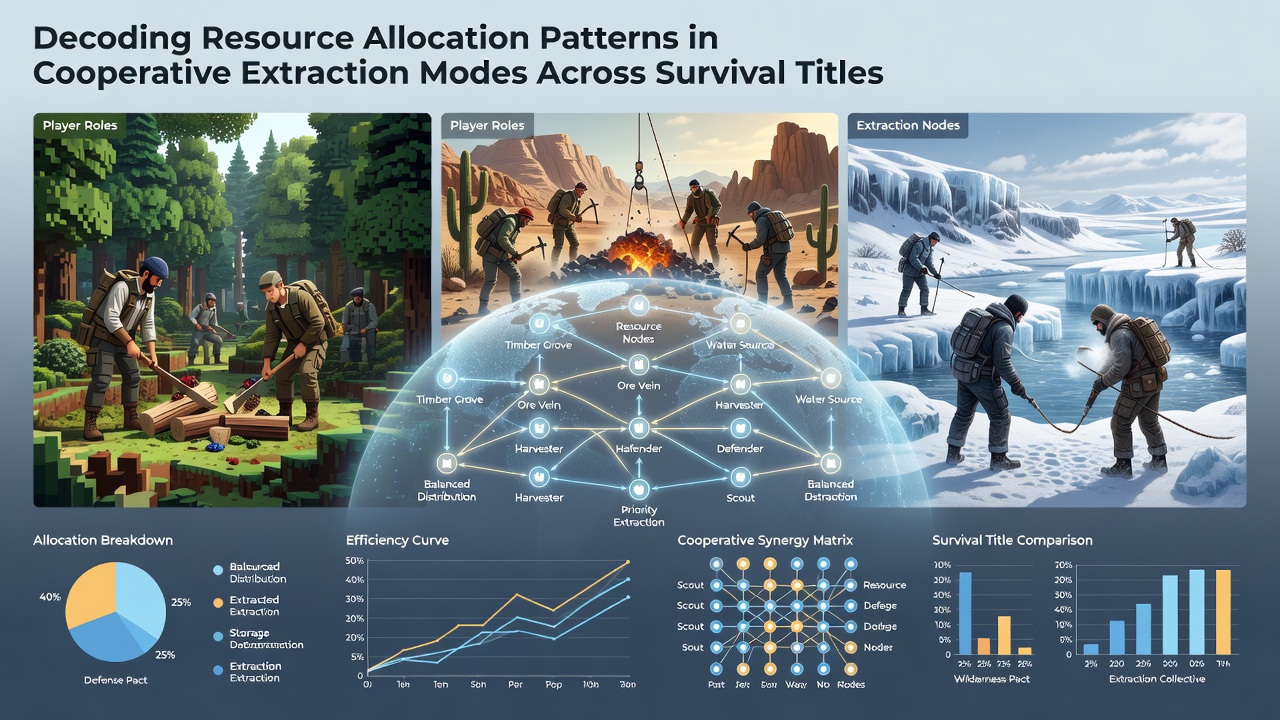
Data Insights from Industry and Academic Sources
Telemetry gathered by independent analytics firms reveals that cooperative extraction success correlates strongly with communication frequency, and groups using voice channels during operations achieve higher resource retention rates than text-only teams. A study released by the Entertainment Software Association in late 2025 examined over 200,000 extraction events across survival platforms and determined that optimal allocation involves maintaining a 3:2 ratio of consumable to durable goods in mobile caches. These findings align with patterns observed in Australian server populations where environmental hazards prompt earlier investment in protective gear before expanding extraction zones. Resource distribution algorithms in newer updates further reinforce these behaviors by penalizing hoarding through decay mechanics that affect unused stockpiles.
Regional Variations in Player Strategies
North American players often emphasize rapid extraction followed by fortified storage, while Asian server communities demonstrate greater focus on long-term trade networks that redistribute extracted materials across allied groups. Canadian academic reviews of survival game ecosystems point to cultural influences on these preferences, with data indicating that collaborative cultures produce more equitable allocation outcomes during high-pressure extraction events. As updates rolled out in October 2026, developers introduced dynamic event triggers that temporarily boost certain resource yields, and these changes prompted teams to recalibrate their allocation models within the first week of deployment.
Conclusion
Patterns in cooperative extraction modes continue to evolve alongside technical improvements in server infrastructure and player tools, and ongoing monitoring by academic and industry groups provides clearer maps of effective resource strategies. These documented behaviors offer frameworks that new players and established teams alike can reference when entering shared survival spaces.